
We are AEEA
The Association
We are AEEA
The AEEA is a non-profit organization whose mission is to promote and disseminate knowledge in the various areas of interest within agri-food economics.
Its main activities include publishing the journal Economía Agraria y Recursos Naturales, organizing the biennial Congress of Agricultural and Food Economics, as well as holding and promoting congresses, conferences, seminars and other scientific, technical and academic activities.
Currently, the AEEA has more than 250 members from different fields related to agri-food economics, including academia, universities and research centers, Public Administration and businesses. The General Assembly of members is the Association’s highest governing body and meets at least once a year.
We are AEEA
Objectives
- Represent professionals in agricultural and agri-food economics before public administrations and other entities
- Promote and disseminate research in the field of agri-food economics
- Maintain and strengthen relationships with public and private institutions and related associations, both in Spain and in other countries
- Promote the exchange of ideas, knowledge and experiences among the different stakeholders in the agri-food sector
- Encourage the participation and research of young researchers through awards, grants and other support initiatives
Activities
Journal of Agricultural and Natural Resource Economics
(Agricultural and Resource Economics), created by the AEEA in 2001 and published through the Open Journal System twice a year. Its aim is to provide a forum for the dissemination and discussion of scientific, technological and technical developments in the field of Agricultural and Natural Resource Economics.
Congress of Agricultural and Food Economics
The Congress of Agricultural and Food Economics is one of the main meeting points for researchers, professionals and specialists involved in agricultural and agri-food economics. Held every two years, the Congress promotes the presentation and discussion of research findings, the exchange of knowledge and debate on the main challenges facing the agri-food sector.
Since its first edition, held in Valencia in 1995, the Congress has become one of the AEEA’s main scientific activities and has brought together researchers and professionals from different national and international institutions.
Ibero-American Congress of Rural Studies (CIER)
The AEEA promotes and participates in academic activities in collaboration with other national and international scientific organizations. Among them is the Ibero-American Congress of Rural Studies (CIER), an interdisciplinary meeting devoted to the analysis and debate of the transformations, challenges and opportunities of rural territories and societies.
CIER has a long history of cooperation between associations and institutions involved in rural studies. Initially established as a space for collaboration between Spain and Portugal, it gradually expanded its scope to the Ibero-American region, strengthening the exchange of knowledge and experiences among researchers and professionals from different countries. The AEEA participates in this initiative alongside other scientific associations, helping to promote research, collaboration and debate on rural issues.
We are AEEA
Other activities
The AEEA organizes and collaborates in other activities. Over the past year, several webinars have been organized, featuring national and international experts and researchers. “Agriculture, Food and COVID-19”, “From Farm to Fork: the beginning of the end of the CAP?” and “The Food Chain Law under review”.
Other activities organized by the AEEA or in which it has actively participated in recent years include the V Workshop (137th EAAE Seminar) on Valuation Methods in Agro-food and Environmental Economics (2013), the I Fernando Ruiz García Award, the Workshop on Valuation Methods in Agro-food and Environmental Economics (2012); the Workshop on Agricultural Valuation and the Conference on the Agri-food Sector and the Economics of Rural Development; the conference “The future of GIs and Regulatory Councils in the Valencian Community” (2009); the conference “Food and agricultural commodity prices” and the seminar “The economics of irrigation water” (2008); and the I Mediterranean Congress of AgroFood Social Scientists (103rd EAAE Seminar, 2007).
Upcoming events
History of the AEEA
The founding meeting took place in November 1964, and the AEEA was formally established in November 1965 with the signing of its first Statutes. It initially adopted the name Spanish Association of Agricultural Economics and Sociology (AEESA), in line with the name given at the time to this field within agricultural engineering education. In 1998, it became the Spanish Association of Agricultural Economics. At the 2019 General Assembly, held in Lugo, its current name was approved: Spanish Association of Agricultural and Food Economics (AEEA).
The Association was founded with the aim of bringing together scholars and researchers studying Spanish agriculture from economic and social perspectives, following in the footsteps of the International Association of Agricultural Economists, founded in the United Kingdom in 1929.
From its origins, the AEEA was established as an independent and interdisciplinary forum for meeting and debate among economists, agricultural engineers, forestry engineers, veterinarians, sociologists and other specialists linked to the agricultural sector. In its early years, it had approximately twenty members, with Emilio Gómez-Ayau as its first president and Miguel Bueno Gómez as its secretary. Its first headquarters were located at the Institute of Agro-Social Studies, which had published the Revista de Estudios Agro-sociales since 1952, a leading publication for the study of Spanish agricultural economics.
We are AEEA
Board of directors

Jesus Barreiro Hurle
President
Senior Scientist at the European Commission’s Joint Research Centre (JRC)
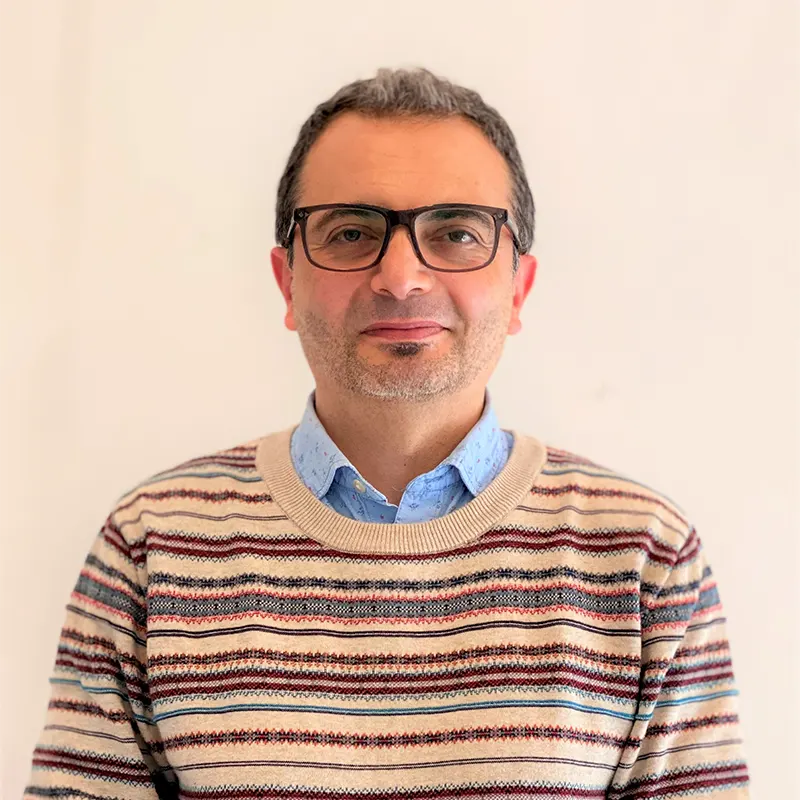
Zein Kallas Calot
President
Professor at the Polytechnic University of Catalonia

Melania Salazar Ordóñez
1st Vice President
Associate Professor at the University of Córdoba

Laura Martínez-Carrasco Martínez
2nd Vice President
Associate Professor at Miguel Hernández University

Hayet Kerras
General Secretary
Postdoctoral Researcher at the Technical University of Cartagena (UPCT)

Paloma Esteve Bengoechea
Treasurer
Assistant Professor at the Technical University of Madrid

Nuria Chaparro Banegas
Board member
Assistant Professor at the Polytechnic University of Valencia

Maria do Mar Pérez Fra
Board member
Assistant Professor at the University of Santiago de Compostela (USC)

Margarita Rico González
Board member
Assistant Professor at the University of Valladolid (UVa)

Juan Urbano López de Meneses
Board member
Technical Advisor at the Subdirectorate General for Agricultural Policy Planning, MAPA
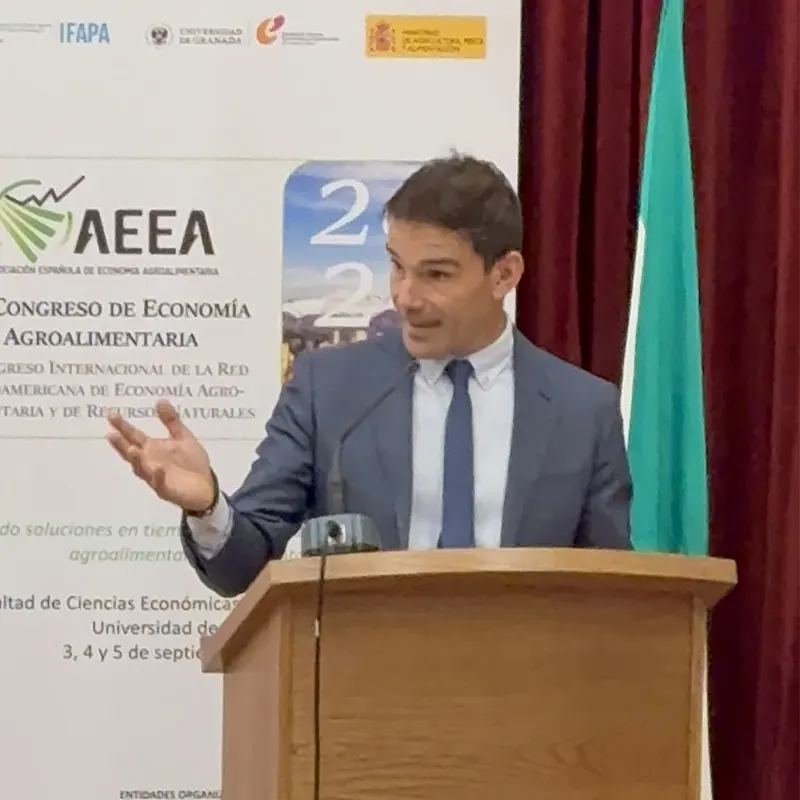
Sergio Colombo
Board member
Principal Researcher at IFAPA-Granada

We are AEEA
Collaborators
The AEEA works closely with the Ministry of Agriculture, Fisheries and Food. Since its inception, technicians and senior officials from the Ministry of Agriculture have served on its Board of Directors. This institutional collaboration is strategic for understanding the Ministry’s priorities in agricultural policy and establishing the most appropriate support mechanisms. Ministry representatives have also participated in congresses and other activities organized by the AEEA, strengthening collaboration between the two institutions.
The Association also maintains a close relationship with the Cajamar Foundation, which collaborates in publishing the journal Economía Agraria y Recursos Naturales and supports congresses and other activities promoted by the AEEA.
Relations and agreements
The European Association of Agricultural Economists (EAAE) and the Spanish Association of Agricultural and Food Economics (AEEA) maintain a Memorandum of Understanding aimed at strengthening cooperation and creating synergies between the two associations, particularly through the dissemination and exchange of information about their respective activities among their members.
The AEEA also has a national liaison point with the EAAE, which helps promote and strengthen relations and collaboration between the two associations.